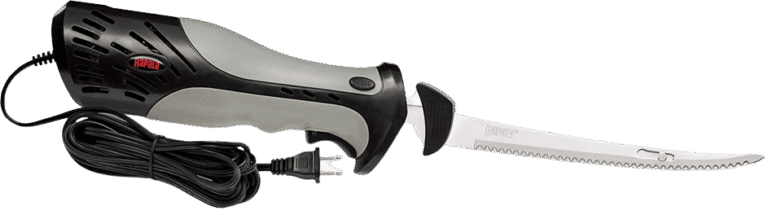
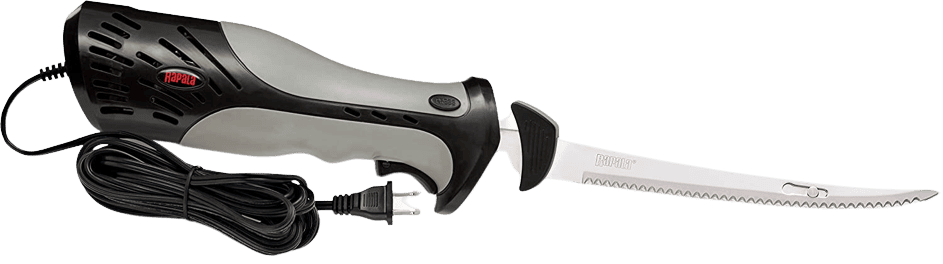
Cleaning advice is useful only when it matches the knife in your hand. This research-based guide separates broad care principles from Rapala HDEFAC and R12 examples. It is not a model-specific replacement manual or a hands-on cleaning test.
Before You Start
Identify the model and read its current operating, battery, and charger instructions. If you cannot identify the knife or reconcile its instructions, ask the manufacturer before proceeding. Our corded versus cordless guide explains the different power arrangements; it does not replace those instructions.
Disconnect Safely
- Switch off and disconnect the corded knife before cleaning or handling blades.
- For a removable-battery model, follow its battery-removal and lockout sequence. The R12 manual requires battery removal before adjustments and storage; being unplugged from a charger does not make an installed battery inactive.
Use the controls and sequence in your own manual. Do not improvise a removal procedure for an integral battery. Rapala booklet; R12 manual.
Remove and Clean the Blades
Use the specified guards and release mechanism, keeping clear of cutting edges. The Rapala booklet describes paired blades that separate at a keyhole connection; that mechanism is not universal.
For the covered Rapala models, wash removed blades with soapy water, rinse, and dry thoroughly. Keep this separate from cleaning powered parts.
HDEFAC dishwasher disagreement: Rapala’s product page calls the blade dishwasher-safe, but its manual prohibits dishwasher cleaning. For that model, GoPolli follows the manual’s more conservative hand-washing guidance. This is not a dishwasher ruling for every brand.
Keep Powered Parts Separate
The Rapala booklet permits a damp-cloth wipe of the motor housing followed by drying, but prohibits immersion or running water. Do not treat a washable blade as evidence that its handle is washable.
R12 charger example: unplug the charging base and remove the battery before cleaning. Its dedicated manual specifies dry-cloth care and warns against damp cloths or detergent on the battery or charger. Do not spray, wash, or submerge these components.
Dry, Inspect, and Store
- Complete the drying and blade-protection steps specified for your model.
- Inspect before reuse. The R12 manual calls for checking damaged parts, misalignment, and binding; missing or damaged parts require correction before operation.
- Keep the stored R12 battery removed and follow its separate storage instructions. Use your own model’s directions for blade sleeves, reassembly, and battery storage.
Maintenance and When to Stop
The R12 manual directs replacement of dull blades. Do not assume a generic sharpening or lubrication routine applies. The older Rapala booklet describes limited blade lubrication but says its motor and gears need no oiling.
Stop using a knife with a damaged cord or plug or after malfunction or damage, and contact authorized service. Do not open the housing to diagnose electrical faults. For an R12 charging base, damage is a reason to stop using it; its manual does not authorize opening it for repair.
Care Sources and Scope
Checked October 1, 2026: Rapala 8.2022 booklet, R12 knife manual, R12 charging-base manual, and the HDEFAC product page. These examples do not establish identical procedures across manufacturers. Read our HDEFAC review for the product-specific context.
GoPolli research sources and evidence notes — October 2026
Manufacturer documents support model specifications. Videos and retailer reviews describe third-party experiences, not GoPolli hands-on testing. Retail listings can mix variants; confirm the exact model before applying customer feedback.