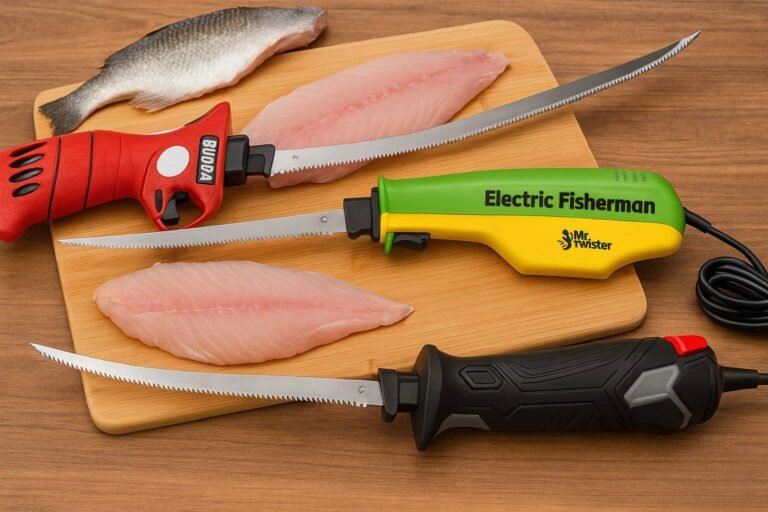
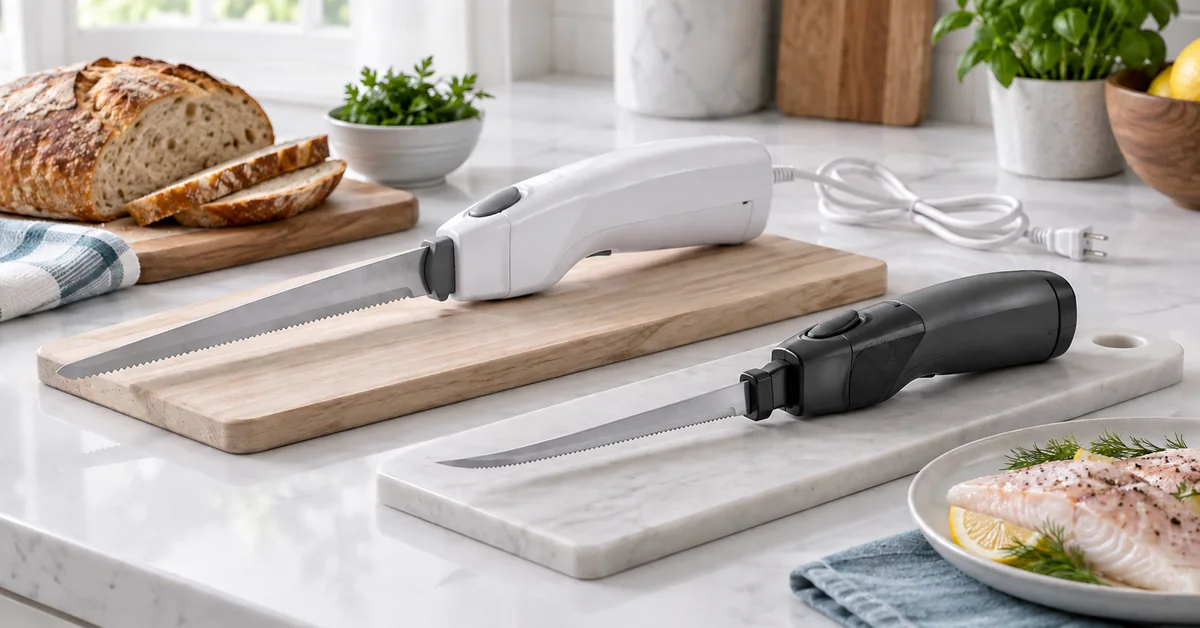
An electric knife uses a small motor to move two serrated blades back and forth. That motion can reduce repetitive sawing when carving cooked meat, slicing bread, or filleting fish, but the blade set and power source must match the job. This guide explains the main types, how to choose between corded and cordless models, and the safety and care practices that matter most.
If your primary goal is cleaning fish, start with our comparison of seven electric fillet knives. This article stays focused on educational buying guidance rather than individual product rankings.
What an electric knife does
Most electric knives use paired, toothed blades that slide in opposite directions. The motor supplies the repeated motion while the user guides the cut. This can be helpful for long, even slices, but it does not remove the need for a stable work surface, careful hand placement, and a blade intended for the food being cut.
Electric knives are specialized tools. They are not a substitute for every chef’s knife, boning knife, or bread knife. For small cuts, delicate trimming, or work that requires frequent direction changes, a sharp manual knife may offer better control.
Carving knives and fillet knives
Electric carving knives
Electric carving knives usually use paired serrated blades intended for cooked roasts, poultry, bread, and similar kitchen tasks. Blade stiffness can help produce even slices. Check the manual before using a carving knife on any dense or partially frozen food, and never assume a model is suitable for bones.
Electric fillet knives
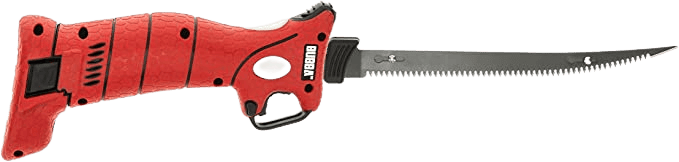
Electric fillet knives are built around fish processing. Their blade length and flexibility vary, so the best match depends on the size of fish and the cuts you make. Saltwater use also makes cleaning, drying, and corrosion-resistant blade materials especially important.
Corded or cordless?
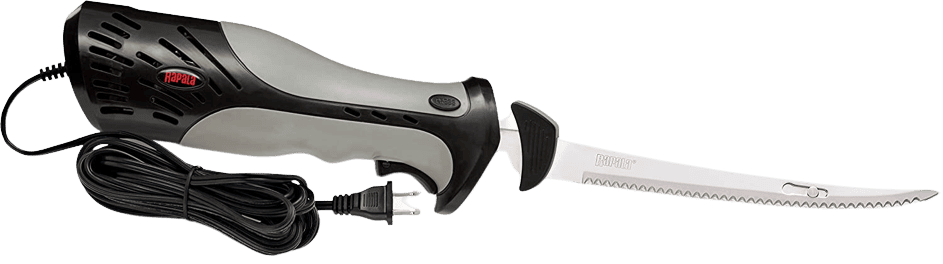
Corded models
A corded knife avoids battery charging and battery-runtime limits when connected to a suitable outlet, but that does not mean it can operate indefinitely. Follow the model’s operating limits and any duty-cycle, cooling or ventilation instructions. Cord length and cable routing affect how easily you can move around a table. The cable can also become an obstruction, so keep it away from water, hot surfaces, cutting paths, and the workpiece.
Cordless models
A cordless knife is easier to use away from an outlet and can reduce cable clutter. Its practical runtime depends on the battery, load, temperature, age, and technique. Compare the number of included batteries, charge time, battery indicator, and whether replacement batteries remain available. Manufacturer no-load runtime should not be treated as guaranteed cutting time.
Five buying criteria
1. Intended use
Start with the food and working environment. A carving model is usually the better fit for cooked meat and bread, while a fillet model is designed around fish. If you need both, verify that the manufacturer supplies compatible blades and expressly permits each use.
2. Blade material, length, and flexibility
Longer blades can suit larger fish or broader cuts; shorter blades can be easier to guide around smaller fish and rib cages. Flexible blades follow contours more easily, while stiffer blades can feel more controlled through denser sections. Included blade variety may be more useful than a single promotional performance claim.
3. Handle and controls
Look for a grip that fits your hand, a trigger you can hold without strain, a clear safety lock, and a blade release that does not put fingers near the cutting edge. Product photos can suggest shape, but only actual handling confirms personal fit.
4. Power source
For repeated work near an outlet, corded power avoids charging pauses. For docks, camps, or kitchens where cable routing is awkward, cordless mobility may be more useful. Voltage alone does not prove cutting performance across different motor and blade designs.
5. Kit contents and support
Compare the exact model number, blade profiles, case, batteries, charger, warranty, and replacement-part availability. Retail listings sometimes combine reviews or images from different generations, so confirm the package against the manufacturer’s current listing.
Safe operation
- Read the model-specific manual before first use.
- Unplug the knife or remove its battery before inserting, removing, cleaning, or inspecting blades.
- Keep hands, cords, and loose clothing away from the moving blades.
- Use a stable cutting surface and guide the knife without forcing it.
- Do not cut frozen food, bones, or other materials unless the manual explicitly permits that use.
- Stop using the knife if the cord, plug, battery, housing, trigger, or blades are damaged.
Cleaning and maintenance
Remove the blades only after disconnecting power. Follow the care and safety instructions supplied for your specific model. If guidance conflicts, seek model-specific clarification from the manufacturer and avoid the disputed cleaning method in the meantime. Dry blades fully before storage, inspect paired blades for damage or poor alignment, and use only compatible replacements.
Serrated or paired blades can require specialized sharpening equipment. If the manufacturer does not provide a sharpening procedure, replacement blades or a qualified sharpening service may be safer than an improvised method.
When an electric knife is not the best tool
A sharp manual knife may be better for a single small task, delicate trimming, tight curves, or situations where power is unavailable. Electric knives also create more parts to clean and store. Choose the tool that gives you control, not simply the one with the most features.
Bottom line
Choose an electric knife by intended use, blade kit, grip and safety controls, power source, and parts support. Corded and cordless designs solve different problems; neither is automatically better. Verify the exact current model, follow its manual, and treat manufacturer performance statements as model-specific claims rather than universal results.
GoPolli research sources and evidence notes — October 2026
Manufacturer documents support model specifications. Videos and retailer reviews describe third-party experiences, not GoPolli hands-on testing. Retail listings can mix variants; confirm the exact model before applying customer feedback.